

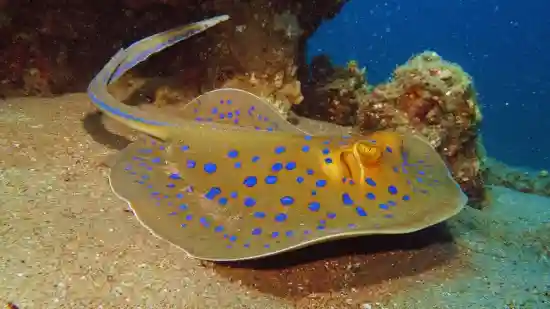
Overview: What Is a Blue Spot Stingray (Round)?
“Blue Spot Stingray (Round)” is a common aquarium-trade label used for blue-spotted rays with a circular body disc. In most cases, this refers to the Bluespotted Ribbontail Ray (Taeniura lymma). The “round” part typically describes the ray’s disc shape rather than a separate species.
In the wild, these rays cruise sandy lagoons near reef edges, fanning the substrate to uncover worms, small crustaceans, and buried prey. In captivity, that same behavior means your tank must include open sand, a safe aquascape, and a feeding plan that prevents the ray from slowly losing body mass over time.
Adult Size
Typically 10–12 inches disc width. Tail extends much longer than the disc.
Care Level
Advanced. Sensitive to instability, shipping stress, and poor feeding routines.
Reef Compatibility
Coral-safe, but may eat small fish/inverts and will shift sand.
Tank Setup: Footprint First, Then Everything Else
Rays don’t “use” vertical space the way angelfish do. They need a wide runway of sand to glide, rest, and hunt. A tall tank with the same gallon rating can still fail if the floor space is too small.
Recommended tank size (real-world)
For long-term success, aim for 300 gallons or larger, ideally 6–8 feet long. Bigger footprints reduce stress, make feeding easier, and help dilute waste from meaty foods. If you plan tank mates, size up again.
✅ Substrate (non-negotiable)
Use fine aragonite sand. Avoid crushed coral or sharp grains. The ray’s belly is vulnerable to abrasions that can become infections. A comfortable ray rests naturally and feeds better.
✅ Aquascape safety
Keep rockwork stable and avoid jagged edges near the sand. Many keepers lift rock on supports so the ray can’t undermine the structure while foraging. Provide shaded zones for daytime resting.
Flow, oxygen, and filtration
Provide moderate flow with calm resting areas. Prioritize oxygenation and export—rays are messy eaters and their food is rich. A strong skimmer, frequent mechanical filtration changes, and a mature biofilter are the difference between a ray that “survives” and one that thrives.
Water Parameters: Stability Is the Secret Weapon
Rays are sensitive to ammonia, nitrite, and sudden swings in salinity or temperature. Your goal is consistency—small weekly corrections beat big “fixes” every time.
Temperature
75–80°F
Salinity
1.023–1.025
pH
8.1–8.4
Ammonia/Nitrite
0 / 0
Never treat with copper. Copper-based medications can be harmful to elasmobranchs (sharks/rays). If quarantine is required, use ray-safe protocols and consult an experienced ray keeper or qualified aquatic veterinarian.
Feeding: How to Keep a Blue Spot Stingray Strong
The #1 long-term issue is slow weight loss. A ray can look “fine” for weeks while gradually becoming thin. Your goal is simple: steady intake of varied marine foods with minimal competition at feeding time.
Best staple foods
- Chopped shrimp (marine, raw)
- Scallop / clam / mussel meat
- Squid pieces (small portions)
- High-quality frozen seafood mixes (no fillers)
Feeding schedule
Feed 4–6x per week (more often for new or lean rays). Smaller, consistent meals are usually better than one huge feeding. Watch disc fullness over time—healthy rays keep a smooth, filled-out profile.
Target-feeding method (the game changer)
- Use tongs to place food directly on the sand near the ray’s mouth.
- Feed at dusk if the ray is shy in bright light.
- Distract fast fish on the opposite side of the tank first.
- Keep portions small so leftovers don’t spike nutrients.
- Optional: vitamin soak 1–2x weekly for nutritional support.
If your ray refuses food after introduction, reduce stress: dim lights, keep hands out of the tank, and avoid aggressive tank mates. Many rays begin eating reliably once they feel secure and learn where food appears.
Tank Mates & Reef Compatibility
Blue Spot Stingrays are generally peaceful, but they are still predators. Also, the ray’s success depends on low stress—fish that nip, pester, or outcompete at feeding time can cause chronic decline.
✅ Usually compatible
- Large tangs & rabbitfish
- Medium-to-large angelfish
- Some wrasses (non-aggressive)
- Calm fish that don’t pick at the ray
❌ Avoid
- Fin nippers & aggressive triggers
- Small bottom sleepers (tiny gobies/blennies)
- Shrimp/crabs you want to keep
- Anything that fits in the ray’s mouth
Reef safe? Coral-safe, but expect sand shifting and potential invertebrate losses. If your reef is built around ornamental shrimp and microfauna, this may not be the right centerpiece animal.
Health Checks: How to Spot Problems Early
The earlier you spot a decline, the easier it is to correct. Use body condition, breathing, and behavior as your daily indicators.
Healthy signs
Full disc, calm breathing, normal gliding, active foraging, and confident feeding response.
Stress signs
Refusing food, rapid breathing, constant pacing, hiding nonstop, or reacting sharply to tank activity.
Physical red flags
Belly abrasions, red patches, frayed edges, or a “sunken” look through the disc.
Safety note: stingrays can sting if startled or pinned. They’re not aggressive, but always keep hands away from the tail and never corner the ray.
Buying Guide: Choose a Strong Specimen (and Avoid Heartbreak)
Blue Spot Stingrays can ship poorly and may arrive stressed. Your best protection is buying from a seller that can confirm the ray is already eating and has a clean underside. Never buy a ray because it “looks cool” in a photo—buy it because it’s healthy, feeding, and suited to your tank.
Buyer checklist
- Ask: “What foods is it eating this week?” (shrimp/clam is a good sign)
- Look for a full disc (not concave or thin-looking)
- Inspect the belly for abrasions or redness
- Confirm the tank is mature and stable (months, not weeks)
- Plan food variety and a target-feeding tool before it arrives
🛒 Ray Essentials (Swap with your real products)


Video: What a Healthy Ray Looks Like at Feeding Time
The fastest way to learn ray behavior is to watch a healthy specimen eat confidently. Replace the embed ID below with your preferred video.
Replace VIDEO_ID_HERE with your YouTube video ID.
FAQs
Is the Blue Spot Stingray (Round) reef safe?
It won’t eat coral, but it can shift sand and may prey on small invertebrates like shrimp and crabs. Think “reef safe with caution.”
What tank size is truly recommended?
A wide footprint matters most. For long-term success, 300 gallons or larger with a 6–8 foot length is a strong baseline.
Why do Blue Spot Stingrays stop eating?
Common reasons include shipping stress, competition from faster fish, unstable salinity/temperature, or a tank that’s too bright and busy. Target feeding at dusk and improving stability often helps.
Do Blue Spot Stingrays bury themselves?
Yes—fine sand allows natural resting and foraging. Coarse substrates can cause abrasions that lead to infections.
Are Blue Spot Stingrays dangerous?
They are not aggressive, but they can sting if startled or pinned. Avoid cornering the ray and keep hands away from the tail.