Wrasse Care Guide • Buying Guide • Compatibility
Goldbar Wrasse (Thalassoma hebraicum): Care, Tank Setup, Diet & Buying Guide
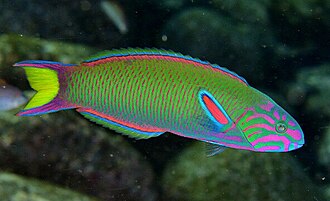
The Goldbar Wrasse is a fast, bold Indo-Pacific wrasse prized for its clean metallic gold bar and nonstop swimming energy. In the right aquarium, it becomes a true “movement fish” that keeps the display lively, reacts to feeding time instantly, and often helps reduce certain nuisance hitchhikers—while still requiring smart tankmate planning.
- Best for: Large fish-dominant or aggressive community tanks
- Minimum tank: 125 gallons (180+ ideal)
- Temperament: Semi-aggressive, active, territorial
- Reef safety: Coral-safe with caution (may eat crustaceans)
Heads up: Wrasses are known jumpers—use a tight lid or mesh cover, especially the first 2 weeks.
Video: behavior, feeding response, and tankmate examples for Goldbar Wrasse.
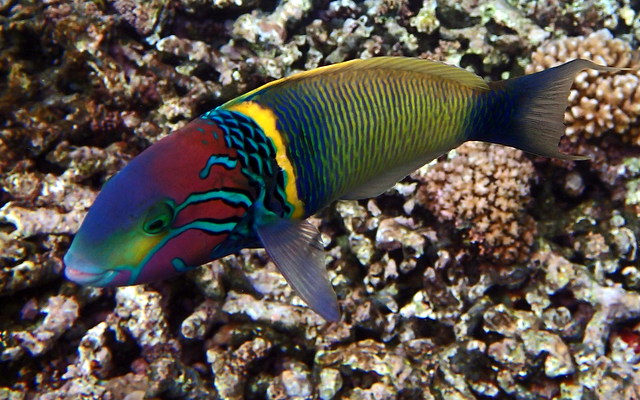
The signature “gold bar” stands out best under bright reef lighting and clear water.
Goldbar Wrasse at a Glance
Goldbar Wrasse Care Guide (Authority Edition)
The Goldbar Wrasse (Thalassoma hebraicum) is a “big-tank personality fish” that thrives when you build the aquarium around its strengths: space, oxygen, stable water quality, and confident tankmates. It’s not a fish that hides in the rock all day. Instead, it actively patrols the tank, investigating crevices and racing through open water. That behavior is exactly why it shines in larger systems—your display feels more alive because this fish is always doing something.
For SEO and real-world success, it helps to think in “buyer intent questions”: How big will it get? Is it reef safe? What does it eat? Will it bully my fish? This guide answers those questions in a practical way—so you can decide if the Goldbar Wrasse belongs in your system and set it up to thrive from day one.
Minimum Tank Size (Why 125 Gallons is the Floor)
The commonly recommended minimum for a Goldbar Wrasse is 125 gallons. That number isn’t arbitrary—it’s tied to swimming style. Thalassoma wrasses move fast, turn hard, and cover distance constantly. In small tanks, they can become stressed, overly territorial, or simply “too much fish” for the space. In larger tanks, they behave more naturally, their aggression is easier to manage, and the aquarium looks better because the fish has room to cruise.
If your goal is a calm, premium display with stable behavior, treat 180 gallons+ as the sweet spot—especially if you plan to keep tangs, angels, or other assertive species.
Aquascape & Flow (Build a Racetrack + Pit Stops)
A winning Goldbar Wrasse aquascape has two zones: open lanes and secure cover. Open lanes allow natural, confident swimming. Secure cover reduces stress and prevents “cornering” during tankmate disputes. Your rockwork should be stable (no shifting), with multiple caves and overhangs. Strong, oxygen-rich flow in at least one area helps support an active fish with a high metabolism.
Setup checklist
- Open swim space (front and midwater)
- Rock caves/overhangs (multiple entrances)
- Strong filtration + protein skimmer
- High oxygenation (surface agitation)
- Secure lid or mesh top
Substrate
Sand is optional. This species is not a dedicated sand-sleeper like many Halichoeres wrasses, but a sand bed can still improve overall tank biology. Prioritize swimming room and cover first.
Water Parameters (Stability Beats Perfection)
Goldbar Wrasses do best in stable, well-oxygenated saltwater with predictable salinity. Avoid rapid swings. If you want a simple rule: keep ammonia and nitrite at zero, keep salinity stable, and keep oxygen high.
- Temperature: 74–80°F
- Salinity: 1.023–1.025
- pH: 8.1–8.4
- Ammonia/Nitrite: 0 ppm
- Nitrate: ideally under 20 ppm
Diet & Feeding (How to Keep Color + Reduce Aggression)
The Goldbar Wrasse is a carnivore and often a very enthusiastic eater. That’s good news—consistent feeding is one of the best “behavior tools” you have. A hungry, hyper wrasse is more likely to harass tankmates or hunt clean-up crew. A well-fed wrasse usually focuses on normal cruising and becomes a predictable, stable tank resident.
Best foods
- Mysis shrimp
- Krill (chopped as needed)
- Chopped clam/squid/seafood blends
- High-quality marine pellets
- Vitamin-enriched frozen mixes
Feeding schedule
Feed 2–3 smaller meals per day. Frequent smaller feedings help maintain body condition and can reduce “hunting mode.” Remove uneaten food to keep nutrients controlled.
For best color, rotate foods and consider occasional enrichment (vitamins/omega supplements) based on your routine.
Compatibility & Reef Safety (What “With Caution” Really Means)
The phrase “reef safe with caution” usually means: coral is fine, but some invertebrates are not. Goldbar Wrasses may prey on small shrimp, crabs, snails, and other ornamental crustaceans—especially if the fish is underfed or the inverts are tiny. If your reef is built around decorative shrimp and a big clean-up crew, pick a more invert-friendly wrasse. If your system is fish-dominant with sturdy inhabitants, the Goldbar Wrasse can be an excellent fit.
Good tankmates (generally):
- Tangs (in properly sized tanks)
- Rabbitfish
- Larger angelfish
- Triggers (species-dependent—monitor closely)
- Other robust wrasses (introduced thoughtfully)
Avoid or use extreme caution with:
- Cleaner shrimp, peppermint shrimp, tiny decorative shrimp
- Very small crabs or “micro” clean-up crew
- Extremely timid fish in tight spaces
- Delicate species that stress easily
Acclimation, Quarantine & Jump Prevention
A calm, predictable introduction often makes the difference between a smooth start and a stressful first week. Dim lights during introduction, provide multiple hiding zones, and offer small meals. If you quarantine, always use a secure lid—wrasses can launch unexpectedly. Many aquarists also introduce wrasses after more timid fish have already claimed territory, or they use an acclimation box to reduce initial conflict.
Why Choose a Goldbar Wrasse?
If you want a fish that looks incredible and stays active, the Goldbar Wrasse delivers. It’s the kind of species that pulls your eyes across the tank—especially in large displays where motion matters as much as color. For many hobbyists, it becomes a “centerpiece mover”: not necessarily the biggest fish, but the one that makes the aquarium feel alive.
High-impact color
Bold gold stripe with vivid tones that pop under bright lighting.
Constant motion
Perfect for big aquariums where movement creates energy and realism.
Hardy eater
Often adapts to pellets + frozen foods once comfortable in the tank.
Gallery: Goldbar Wrasse in Aquariums
Swap in your own photos or licensed images. Use descriptive filenames + alt text for image SEO.


Goldbar Wrasse vs Other Popular Wrasses
Not all wrasses behave the same. Use this quick comparison to choose the right fit for your aquarium goals.
| Wrasse | Adult Size | Reef Safe? | Temperament | Best For |
|---|---|---|---|---|
| Goldbar Wrasse (Thalassoma hebraicum) | Up to ~8″ | With caution | Semi-aggressive | Large fish-dominant systems |
| Melanurus Wrasse (Halichoeres melanurus) | ~5″ | Mostly | Moderate | Reef tanks + pest control |
| Six Line Wrasse (Pseudocheilinus hexataenia) | ~3″ | Often | Can be aggressive | Smaller reefs (with planning) |
Ready to Add a Goldbar Wrasse?
If your tank is 125 gallons or larger and you want a fish with presence, speed, and bold coloration, the Goldbar Wrasse is a top-tier choice. Confirm your tankmate plan, lock down the lid, and you’re set.
Tip: Introduce wrasses after timid fish settle, or use an acclimation box if needed.
Buying checklist
- Tank 125g+ with open swim space
- Secure lid or mesh cover
- Stable salinity & high oxygenation
- Robust tankmates (avoid ornamental shrimp)
- Food variety ready (pellets + frozen)