Midnight Angelfish (Centropyge nox)
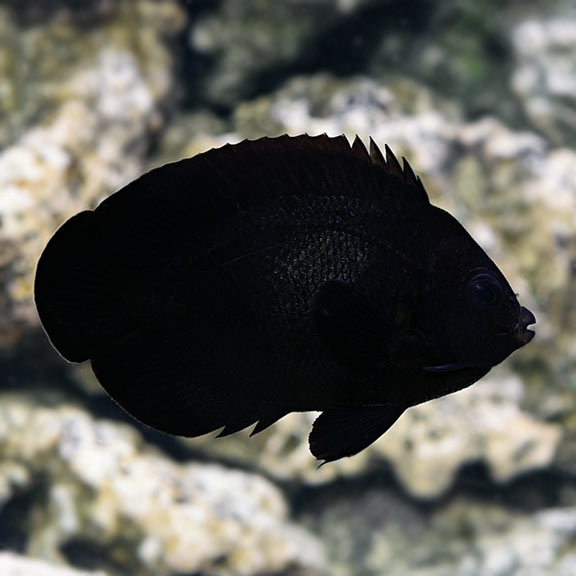
The Midnight Angelfish is one of the most unique dwarf angelfish available in the marine aquarium trade. With its deep jet-black coloration and elegant swimming behavior, Centropyge nox creates dramatic contrast in reef aquariums. Hardy, reef-aware, and ideal for experienced hobbyists, this angelfish is a striking addition to 55+ gallon systems.
Quick Care Overview
- Scientific Name: Centropyge nox
- Common Name: Midnight Angelfish
- Adult Size: 4 inches
- Minimum Tank Size: 55 gallons
- Temperament: Semi-aggressive
- Reef Safe: With caution
- Diet: Omnivore (algae + meaty foods)
Midnight Angelfish Care Guide
Tank Requirements
Provide at least 55 gallons with mature live rock for grazing. The Midnight Angelfish thrives in stable reef environments with plenty of hiding spots. Maintain salinity at 1.023–1.025, temperature between 72–78°F, and strong filtration.
Diet & Feeding
Feed a varied omnivorous diet including marine algae, spirulina, mysis shrimp, brine shrimp, and high-quality angelfish preparations. Offer multiple small feedings daily for optimal health and coloration.
Reef Compatibility
This species is considered reef safe with caution. While many individuals ignore corals, some may nip at LPS, zoanthids, or clam mantles. Best introduced after more peaceful fish and monitored during initial weeks.
Behavior & Tankmates
Semi-aggressive toward other dwarf angelfish. Avoid housing with similar Centropyge species unless tank size exceeds 100 gallons. Compatible with tangs, wrasses, gobies, and clownfish.
Why Choose the Midnight Angelfish?
- Rare solid-black dwarf angelfish
- Hardier than many dwarf angelfish species
- Perfect contrast fish for reef displays
- Excellent personality and active swimmer
Frequently Asked Questions
Is the Midnight Angelfish reef safe?
Generally reef safe with caution. Monitor around LPS corals and clams.
How big does a Midnight Angelfish get?
Up to 4 inches in captivity.
What does Centropyge nox eat?
Marine algae, spirulina-based foods, mysis shrimp, and high-quality angelfish blends.