Reef-Safe • Beginner Friendly • Nano Tank Favorite
Firefish Goby Care Guide (Dartfish)
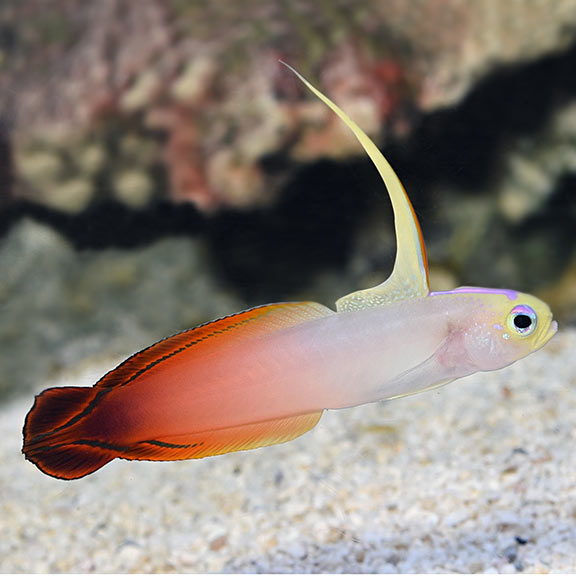
The Firefish Goby (Nemateleotris magnifica) is one of the most peaceful, photogenic reef fish you can keep. It “hovers” in the water column like a tiny kite, flashing a white body and fiery red tail—then darts into a burrow when startled. This guide covers tank size, feeding, jumping prevention, and the best tank mates so you can keep your Firefish thriving for years.
Quick Facts: Firefish Goby
Scientific name
Nemateleotris magnifica
Common names
Firefish, Fire Dartfish, Red Firefish
Adult size
Up to ~3 inches
Minimum tank
20 gallons (30+ is even easier)
Reef compatibility
100% reef-safe
Temperament
Peaceful (can be shy)
One thing matters more than anything else: a Firefish is famous for jumping. If you do nothing else, do this—use a tight lid or mesh screen and block escape routes around overflows.
Why Firefish Gobies Are a Top Reef Pick
Firefish are popular for one simple reason: they look incredible without acting like a bully. Many “colorful” saltwater fish come with trade-offs—aggression, coral nipping, or a huge adult size. Firefish skip the drama. They stay small, remain peaceful, and add motion to the mid-water column, often hovering in place above the sand like a tiny helicopter. In a modern reef display, that calm hovering behavior creates a “living postcard” effect.
They’re also a smart choice for newer hobbyists because they don’t require exotic feeding routines or specialized tank equipment. Give them stable water, a few caves, and the right tank mates—and they reward you with bold color and surprisingly confident behavior.
Tank Setup & Water Parameters
Firefish come from reef slopes and sandy zones where they can retreat into crevices. In an aquarium, you’re aiming for the same vibe: open water to hover, plus rockwork caves they can claim as a “panic room.”
- Tank size: 20 gallons minimum (30–40 gallons feels calmer)
- Temperature: 76–80°F
- Salinity: 1.024–1.026
- pH: ~8.1–8.4
- Flow: Moderate (avoid blasting their hover zone)
- Lighting: Reef lighting is fine; lower light helps during introduction
Best aquascape for Firefish: Build two or three “tunnels” at the base of your rockwork and keep one open sandy area in front. That gives them a safe retreat and a comfortable hovering stage.

Jumping Prevention (Read This First)
Firefish are not “maybe” jumpers—they are legendary jumpers. Most jumps happen when: (1) the fish is newly introduced, (2) a fast tank mate startles it, (3) lights suddenly turn on/off, or (4) it gets chased away from its favorite crevice. The solution is simple: treat the lid like life support.
Use a mesh screen lid
Mesh lids reduce heat, allow light, and stop escapes without looking bulky.
Cover gaps & overflows
Seal cutouts around plumbing and overflow boxes—Firefish find the smallest exits.
Reduce startle triggers
Ramp lights, avoid sudden noise, and keep aggressive fish out of the tank.
Quick test: If you can slide a pencil through any opening at the top, a Firefish can probably find it too. Patch it before you add the fish.
Feeding & Diet (How to Keep Them Bold)
Firefish are small carnivores that naturally pick off tiny meaty items drifting in the water column. In aquariums, they do best on high-quality frozen foods plus a dependable pellet that sinks slowly. The biggest feeding mistake is underfeeding during the first week because Firefish can be shy and may let faster fish steal meals.
Best Foods
- Mysis shrimp (a staple)
- Enriched brine shrimp (as a treat)
- Finely chopped marine seafood
- Micro pellets (slow-sinking)
- Frozen “reef blends” with small particle sizes
Feeding Schedule
Feed 1–2 times daily in small portions. If the fish is new or timid, consider two smaller feedings instead of one big feeding.
Tip: Turn off strong pumps for 5–10 minutes so food stays in the hover zone longer.
Tank Mates & Compatibility
Firefish do best in peaceful community reefs. They’re not built for brawls—so your goal is to avoid fish that chase, outcompete at feeding time, or constantly invade their cave.
Great Tank Mates
- Clownfish (generally fine in most reefs)
- Royal Gramma
- Banggai Cardinalfish
- Peaceful gobies & blennies
- Cleaner shrimp & peaceful inverts
Avoid These
- Aggressive dottybacks
- Large wrasses that harass new fish
- Triggers, large hawkfish, or predators
- Territorial fish that claim the same caves
- Anything known for chasing timid fish
Ordering tip: If you’re building a new reef, add Firefish early—before semi-aggressive fish establish territory. A settled Firefish is far less likely to hide constantly.
Can You Keep Two Firefish Together?
Sometimes—but only with the right approach. In many tanks, two Firefish introduced randomly can fight, especially in smaller footprints. The safest option is a bonded pair or two individuals introduced carefully in a larger, peaceful setup with multiple caves.
- Best chance of success: A known bonded pair
- Tank size: 40+ gallons recommended for two
- Aquascape: Multiple bolt-holes (at least two distinct cave systems)
- Behavior to watch: Persistent chasing, fin nipping, blocking access to food
If you notice one fish hiding constantly while the other patrols, treat that as a warning sign. Firefish should look calm and “hover confident,” not stressed and pinned to a corner.
Acclimation & The First Week
Firefish are hardy once settled, but they can be jumpy (literally) during the first few days. A gentle introduction makes a massive difference in how quickly they start eating and hovering in the open.
Day 1: Dim + Quiet
Lower the lights, keep the room calm, and let them find their cave.
Day 2–3: Small Meals
Offer mysis or micro foods—watch that tank mates don’t steal it all.
Day 4–7: Routine
Same feeding times, stable parameters, and slow light ramps build confidence.
Confidence cue: When a Firefish starts hovering in the open even while you’re nearby, you’ve nailed the setup.
Health, Stress Signs, and Common Issues
Most Firefish problems come from stress: harassment from tank mates, unstable parameters, or poor feeding access. A stressed Firefish becomes a “ghost fish” that hides all day and stops eating confidently. Solve the environment first—then worry about everything else.
Healthy Firefish Looks Like
- Regular hovering in the mid-water
- Quick dart to cave, then returns
- Eating frozen and/or pellets with interest
- Clear eyes and intact fins
Stress Signs
- Hiding constantly for days
- Rapid breathing or clamped fins
- Refusing food while others eat
- Scraping/flashing (may indicate parasites)
If you see consistent stress, the fix is usually one of these: add more caves, reduce aggression, adjust flow, or ensure the Firefish gets food by target feeding near its hover zone.
Recommended Gear for Firefish Success
You don’t need much for a Firefish—just the essentials that support calm behavior, stable water, and no escape routes. Here are a few high-impact upgrades that make Firefish ownership dramatically easier.


Want a perfect Firefish-friendly stocking plan?
Use the planner to match peaceful tank mates by size, temperament, and tank volume.
Watch: Firefish Goby Care (Video)
Add a short care video here for higher time-on-page and better engagement. Keep it educational: tank size, lid, feeding, and compatible tank mates.
Firefish Goby FAQ
Are Firefish Gobies reef safe?
Yes. Firefish are considered fully reef safe. They don’t nip corals and generally ignore invertebrates.
What tank size is best for a Firefish?
A 20-gallon tank is the common minimum, but a 30–40 gallon reef provides extra stability and space, especially if you want more tank mates.
Do Firefish jump out of tanks?
Yes—Firefish are known jumpers, especially during the first week or if startled. Use a tight lid or mesh screen and cover overflow gaps.
Can I keep two Firefish together?
Sometimes. A bonded pair in a larger peaceful tank (40+ gallons) with multiple caves has the best success. Random pairs can fight in smaller tanks.
What should I feed a Firefish Goby?
Feed meaty foods like mysis shrimp, enriched brine, small frozen blends, and slow-sinking micro pellets. Offer 1–2 small meals daily.
Next step:
Want a companion fish list for your exact tank size? Try the Custom Aquarium Planner and build a calm Firefish-friendly community reef.